Showing posts with label Dessert. Show all posts

Monday, 11 April 2016

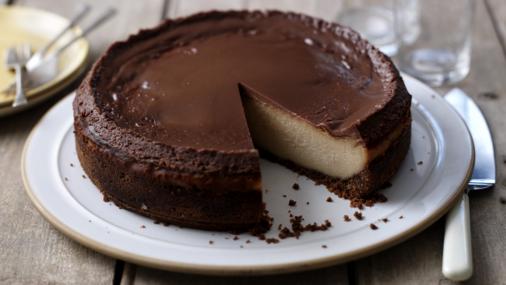
Chocolate peanut butter cheesecake

Ingredients

For the base
200g/7oz digestive biscuits
50g/2oz salted peanuts
100g/3½oz dark chocolate chips
50g/2oz unsalted butter, softened

For the filling
500g/1lb 1oz cream cheese
3 free-range eggs
3 free-range egg yolks
200g/7oz caster sugar
125ml/4¼fl oz soured cream
250g/9oz smooth peanut butter

For the topping
250ml/9fl oz soured cream
100g/3½oz milk chocolate chips
30g/1¼oz soft brown sugar


Method

  • Preheat the oven to 170C/325F/Gas 3.
  • For the base, process the biscuits, peanuts, dark chocolate chips and butter in a food processor. Once the mixture comes together in a clump, turn it out into a 23cm/9in springform tin and press it into the bottom of the tin and up the sides, using your fingers, to make a crunchy crust. Chill in the fridge while you make the filling.
  • For the filling, process the cream cheese, eggs and egg yolks, sugar, soured cream and peanut butter in a food processor, whizzing to a smooth mixture.
  • Pour and scrape the filling mixture into the cheesecake base in the chilled springform tin and cook for 1 hour, checking after 50 minutes. The top – only – should feel set and dry. When cooked, take the cheesecake out of the oven while you make the topping.
  • For the topping, warm the soured cream and chocolate chips with the brown sugar gently in a small saucepan over a low heat, whisking to blend in the chocolate as it melts. Once the mixture is melted and well combined, take off the heat.
  • Spoon and spread the topping very gently over the top of the cheesecake, being as careful as you can in case you break the surface of the cheesecake. (Not that anything bad will happen; you’ll just have chocolate marbling the cake a bit.) Put it back in the oven for a final 10 minutes.
  • Once out of the oven, let the cheesecake cool completely in its tin, then cover and put into the fridge overnight. When you are ready to eat the cheesecake, take it out of the fridge slightly in advance, just to take the chill off: this will make it easier to spring from the tin. Don’t let it get too warm, though, as it will become a bit gooey and be hard to slice.


Recipe Tips
All ingredients should be at room temperature before you start. The cheesecake can be made up to 2 days ahead. Once made, cool and chill as directed. Do not cover until completely cold, then cover with a plate or cling film, making sure that the covering does not touch the surface of the cheesecake. Chill in the fridge until needed, then unmould and serve as directed. The cheesecake will keep in the fridge for up to 4 days in total.

The cheesecake can also be frozen for up to 1 month. To freeze, chill thoroughly, then wrap, still in its tin, in a double layer of cling film and one layer of aluminium foil. Defrost overnight in the fridge and eat within 2 days. Some condensation may appear on the surface of the cheesecake when defrosting but it's fine to eat.

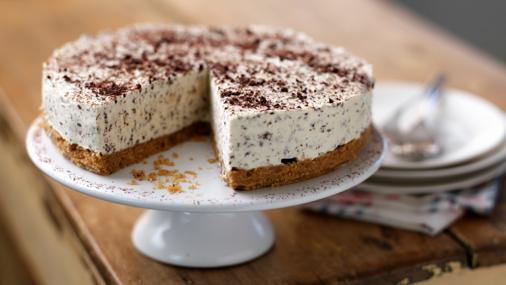
Irish cream and chocolate cheesecake

Ingredients

100g/3½oz butter
250g/8¾oz digestive biscuits, crushed
600g/1lb 5oz cream cheese
25ml/1fl oz Baileys or other Irish cream liqueur
100ml/3½oz icing sugar
300ml/10½oz double cream, whipped
100g/3½oz grated chocolate

To garnish
200ml/7¼oz double cream, whipped
cocoa powder, to dust


Method

  • Melt the butter in a pan and add the crushed digestive biscuits. Mix well until the biscuits have absorbed all the butter.
  • Remove from the heat and press into the bottom of a lined 18cm/7in springform tin. Place in the refrigerator and allow to set for one hour.
  • Meanwhile, prepare the filling. Lightly whip the cream cheese then beat in the Irish cream and icing sugar. Fold in the whipped cream and grated chocolate. When smooth, spoon evenly onto the biscuits.
  • Refrigerate and allow to set for a further two hours. Once set, remove and decorate with whipped cream and cocoa powder dusted over the top. Serve.


Chocolate profiteroles

Ingredients

For the choux pastry
200ml/7fl oz cold water
4 tsp caster sugar
85g/3oz unsalted butter, plus extra for greasing
115g/4oz plain flour
pinch salt
3 medium free-range eggs, beaten

For the cream filling
600ml/1 pint double cream
1 orange, zest only
For the chocolate sauce
100ml/3½fl oz water
80g/3oz caster sugar
200g/7oz good-quality dark chocolate, broken into pieces


Method

  • Preheat the oven to 200C/400F/Gas 6. Place a small roasting tin in the bottom of the oven to heat.
  • For the choux pastry, place the water, sugar and butter into a large saucepan. Heat gently until the butter has melted.
  • Turn up the heat, then quickly pour in the flour and salt all in one go.
  • Remove from the heat and beat the mixture vigorously until a smooth paste is formed. Once the mixture comes away from the side of the pan, transfer to a large bowl and leave to cool for 10-15 minutes.
  • Beat in the eggs, a little at a time, until the mixture is smooth and glossy and has a soft dropping consistency - you may not need it all.
  • Lightly grease a large baking sheet. Using a piping bag and plain 1cm/½in nozzle, pipe the mixture into small balls in lines across the baking sheet. Gently rub the top of each ball with a wet finger - this helps to make a crisper top.
  • Place the baking sheet into the oven. Before closing the oven door, pour half a cup of water into the roasting tin at the bottom of the oven, then quickly shut the door. This helps to create more steam in the oven and make the pastry rise better. Bake for 25-30 minutes, or until golden-brown - if the profiteroles are too pale they will become soggy when cool.
  • Remove from the oven and turn the oven off. Prick the base of each profiterole with a skewer. Place back onto the baking sheet with the hole in the base facing upwards and return to the oven for five minutes. The warm air from the oven helps to dry out the middle of the profiteroles.
  • For the filling, lightly whip the cream with the orange zest until soft peaks form. When the profiteroles are cold, use a piping bag to pipe the cream into the profiteroles.
  • For the chocolate sauce, place the water and sugar into a small saucepan and bring to the boil to make a syrup. Reduce the heat to a simmer and place the chocolate into a heatproof bowl set over the pan. Heat, stirring occasionally, until melted. Take the pan off the heat, pour the syrup mixture into the chocolate and stir until smooth and well combined.
  • To serve, place the stuffed profiteroles into a large serving dish and pour over the chocolate sauce. Serve hot or cold.


Tiramisini

Ingredients

100ml/3½fl oz espresso or strong instant coffee
2 tbsp coffee liqueur
4 Savoiardi biscuits (fine sponge ‘ladyfinger’ biscuits)
2 free-range egg whites
250g/9oz mascarpone
2 tbsp honey
2 tbsp Marsala
1 tsp cocoa powder


Method

  • Make your espresso and pour it into a heatproof jug, adding the coffee liqueur, then leave it to cool - I find ten minutes outside the window on a cool day does it!
  • Break each Savoiardi sponge finger into about four and drop the pieces into four small martini glasses, then pour the cooled espresso mixture over them. Press down gently, making sure the biscuits are soaked all over.
  • Using an electric hand-held whisk for ease, beat the egg whites in a bowl until they form soft peaks when the whisk is removed, and set aside for a moment.
  • Scrape the mascarpone into another bowl, adding the honey: I love the way its mellow sweetness marries with the Marsala (though sugar would be fine, too). Beat with the whisk (no need to clean it out first) and, when smooth, slowly beat in the Marsala.
  • Fold in the egg whites, a third at a time, then dollop this mixture over the soused Savoiardi in each glass, using a spoon to whirl it into an elegant peak at the top.
  • Let these stand in the fridge for at least 20 minutes and up to 24 hours, then dust with cocoa, pushing it through a fine-mesh strainer, just before serving.


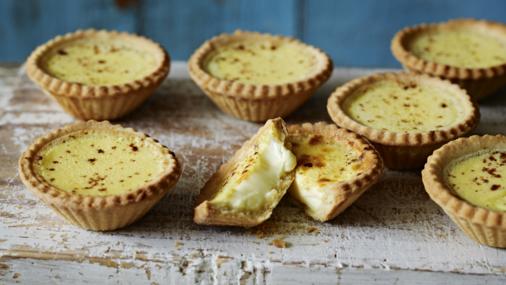
Egg custard tarts

Ingredients

For the sweet pastry
165g/5¾oz plain flour, plus extra for dusting
25g/1oz ground almonds
120g/4¼oz chilled unsalted butter, cubed
55g/2oz caster sugar
1 free-range egg

For the custard filling
700ml/1¼ pint full-fat milk
7 free-range egg yolks
90g/3¼oz caster sugar
freshly ground nutmeg


Method

  • To make the pastry, stir the flour and ground almonds together in a large bowl, then add the butter and rub in with your fingertips until the mixture resembles breadcrumbs. Stir in the sugar.
  • Break in the egg and work it into the mixture with your fingers, bringing it together to form a soft dough.
  • Tip the dough onto a lightly floured work surface and shape it into a ball. Flatten with your fingers to a disc and wrap in cling film. Leave to chill in the fridge for 30 minutes.
  • Preheat the oven to 200C/400F/Gas 6.
  • Roll out the sweet pastry on a lightly floured work surface.
  • Using an 11cm/4½in fluted cutter, cut out twelve discs and line the muffin tray moulds with the pastry circle. The pastry should overlap the top of the moulds by a few millimetres, so that you can crimp the edges if you wish.
  • For the custard filling, warm the milk in a saucepan, and beat the egg yolks and sugar together in a separate bowl until pale and creamy.
  • Pour the milk onto the egg yolk mixture and stir well, creating little bubbles.
  • Transfer the custard mixture into a pouring jug with a lip, then fill each of the tart cases.
  • Sprinkle a small pinch of ground nutmeg into the middle of each tart.
  • Bake the tarts in the oven for about 25 minutes - you may need to turn the temperature down to 180C/350F/Gas 4 for the final 10 minutes. You are looking for a very slight dome on the custard, indicating that it is baked. If the custard domes too much this indicates that you have over-cooked the custard, it will have boiled, and will sink back down leaving a big dip. If this does happen you can help rescue it by removing the tarts from the oven immediately and placing the tin in cold water on a cold surface.
  • Cool in the tin for 30 minutes and then carefully remove from the moulds. The base of the tarts should be perfectly baked through, without having over-cooked the custard filling.


Recipe Tips
These tarts are best eaten on the day they're made, as the pastry will soften over time.


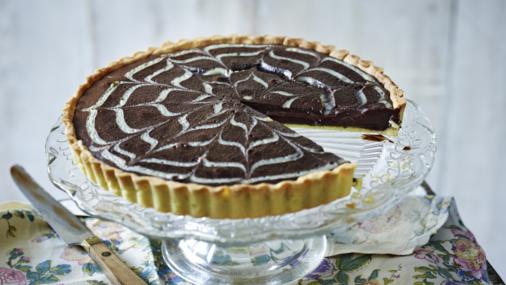
Chocolate orange tart

Ingredients

For the pastry
100g/3½oz plain flour, plus extra for dusting
50g/1¾oz icing sugar
50g/1¾oz butter, diced, plus extra for greasing
1 large free-range egg yolk

For the chocolate filling
75g/2½oz butter
115g/4oz dark chocolate (no more than 60% cocoa solids), finely chopped
115g/4oz golden caster sugar
55g/2oz plain flour
4 medium free-range eggs

For the orange filling
25g/1oz butter
50g/1¾oz white chocolate
1 orange, finely grated zest only
35g/1¼oz golden caster sugar
25g/1oz plain flour
2 medium free-range egg yolks


Method

  • Grease a 23cm/9in fluted tart tin with butter.
  • For the pastry, measure the flour, icing sugar and butter into the bowl of a food processor and pulse until the mixture resembles fine breadcrumbs. Add the egg yolk and a tablespoon of cold water and mix until it comes together to form a soft dough.
  • Wrap the dough in cling film and leave to rest in the fridge for about 30 minutes.
  • Preheat the oven to 200C(180C fan)/400F/Gas 6.
  • Dust the work surface with flour then roll out the pastry as thinly as you can to a circle about 5cm/2in larger than your flan tin.
  • Line the tin with the pastry. Don’t worry if the pastry breaks a little, it is easy to patch up. Chill for 15 minutes.
  • Prick the base of the pastry with a fork, line the pastry case with baking paper or foil and fill with baking beans. Bake the pastry blind for 10 minutes, or until just lightly golden-brown. Remove the paper and beans and return the tart to the oven to cook for a further 5-7 minutes, or until pale golden-brown and the base is cooked.
  • To make the chocolate filling, melt the butter and chocolate in a heatproof bowl set over a pan of gently simmering water until melted and smooth. Remove from the heat and stir in the sugar and flour. Beat in the eggs, one at a time, and leave to stand.
  • To make the orange filling, melt the butter and white chocolate in a heatproof bowl set over a pan of gently simmering water until melted and smooth. Remove from the heat and stir in the orange zest, sugar and flour. Beat in the egg yolks, one at a time and pour the mixture into a jug.
  • Place the pastry case on a baking tray. Pour the chocolate mixture into the pastry case. Drizzle or pipe the orange filling over the chocolate filling to create a swirl effect. Draw a cocktail stick through the filling to create a marbled effect.

Bake for 10-12 minutes, or until just set around the edges, but still slightly wobbly in the centre.
Remove from the oven and allow to cool slightly, until warm but not piping hot, then serve.


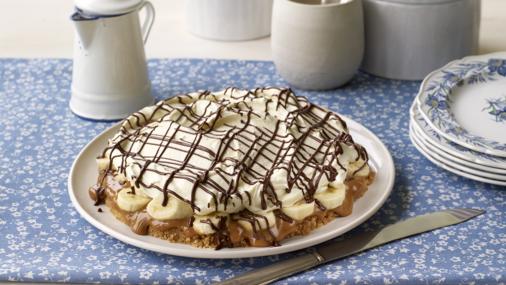
Banoffee pie

Ingredients

For the caramel
100g/3½oz unsalted butter
100g/3½oz caster sugar
400g/14fl oz can condensed milk

For the banoffee pie
150g/5 oz digestive biscuits, crushed
230g/8oz pecans, halved
75g/3oz butter, melted
3 large bananas, chopped
250ml/10½oz double cream, whipped until soft peaks form when the whisk is removed
cocoa powder, for dusting

For the caramel sauce
125g/4oz unsalted butter
125g/4oz soft light brown sugar
125ml/4fl oz coconut milk


Method

  • For the caramel, place the butter and sugar into a non-stick pan over a low heat, stirring until the butter melts and the sugar dissolves.
  • Add the condensed milk and slowly bring to the boil, stirring continuously, to make the caramel. As soon as the mixture thickens and begins to smell of caramel, remove from the heat and allow to cool.
  • Meanwhile, for the banoffee pie, place the crushed biscuits and 115g/4oz of the pecans into a bowl. Add the butter and mix well.
  • Transfer the mixture to a 25cm/10in cake tin. Press in to pack the mixture evenly into the base.
  • Add the chopped bananas to the caramel mixture and mix well, then spread the mixture over the biscuit base.
  • Transfer to the refrigerator to cool for 30 minutes.
  • Remove from the fridge and spread the whipped cream evenly over the top of the banoffee layer.
  • Place the remaining pecans over the top in a circular arrangement and dust with cocoa powder.
  • For the caramel sauce, place the butter, sugar and coconut milk into a heavy-based pan over a medium heat. Bring to the boil and cook for 3-4 minutes, until it forms a thick, light golden-brown sauce.
  • To serve, cut out slices of the banoffee pie, place onto plates and pour over the caramel sauce.


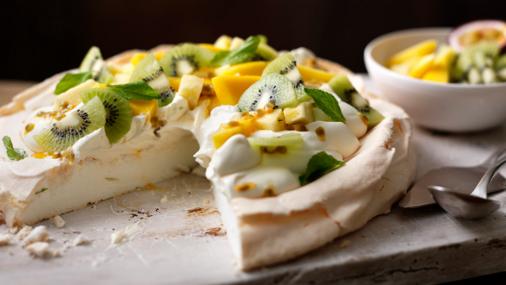
Pavlova

Ingredients

8 large egg whites (at room temperature)
pinch of salt
350g/12oz caster sugar
2 tsps/10g cornflour
pinch of cream of tartar
1 tsp/5ml white wine vinegar
4 drops vanilla essence
300ml/½pint double cream, firmly whipped
selection of prepared tropical fruit e.g. mango, pineapple, passion fruit.


Method

  • Preheat the oven to 180C/350F/Gas4. Line a baking tray with greaseproof paper. Draw a 20cm/8inch circle on the paper.
  • Whisk the egg whites with half the sugar and the salt in a clean bowl until soft peaks form. Continue beating while adding the remaining sugar until stiff and shiny. Sprinkle over the cornflour, cream of tartar, vinegar and vanilla essence and fold in gently with a metal spoon.
  • Mould the egg white mix onto the paper within the circle. Flatten the top and smooth the sides. Place in the oven and immediately reduce the heat to 150C/300F/Gas 2 and cook for 1¼ hours.
  • Turn off the oven, leave the door slightly ajar and allow to cool completely. Invert 'Pav' onto a plate, gently push down the meringue then pile on the cream and dress with the tropical fruit.


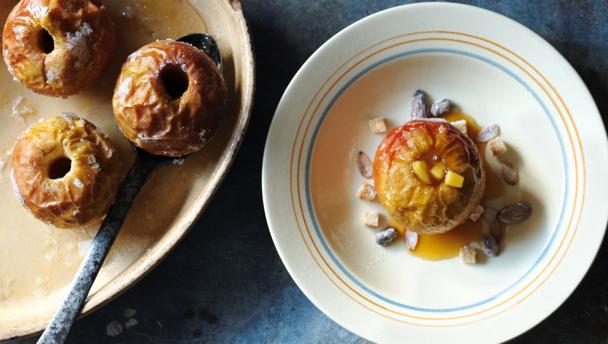
Baked apples with Calvados sauce

Ingredients

For the baked apples
4 Reines des Reinettes apples, or similar russet apples, washed, dried
60g/2½oz unsalted butter, melted
4 tbsp caster sugar
For the Calvados sauce
50g/2oz caster sugar
20g/¾oz unsalted butter
40g/1½oz Braeburn apple, peeled, cut into 0.5cm/¼in dice
80ml/3¼oz apple juice
½ tsp arrowroot, diluted in a little water
1 tsp Calvados

For the garnish
15g/½oz bread, cubed
15g/½oz icing sugar
15g/½oz pistachio nuts
10g/¼oz whole almonds
5g flaked almonds
1-2 tsp Calvados


Method

  • For the baked apples, preheat the oven to 170C/350F/Gas 4.
  • Cut the bases off any apples that do not sit flat, making sure not to remove too much of the base. Remove the cores from the apples, using an apple corer or a small sharp knife.
  • Brush a shallow ovenproof dish with some of the melted butter and sprinkle over some of the sugar. Brush each apple with the remaining melted butter, then roll them in the remaining caster sugar. Place the apples into the ovenproof dish and bake in the oven for 30 minutes. If possible cook the apples in without fan assisted heat as this is too intense and will burst the skin of the apple before it is cooked.
  • For the Calvados sauce, heat the sugar in a small saucepan over a medium heat until it reaches a dark golden caramel.
  • Stir in the butter and add the diced apples , cook for 30 seconds, without moving the pan (use a spoon to cover the apples in the caramel mixture).
  • Add the apple juice and bring to the boil.
  • Stir in the diluted arrowroot a little at a time, until it has thickened slightly, then remove from the heat and add the Calvados.
  • For the garnish, mix together the bread cubes and half of the icing sugar. Sprinkle the mixture onto a baking tray.
  • Mix the pistachios, whole and flaked almonds, Calvados and the remaining icing sugar together until well combined. Spread the mixture onto the same baking tray.
  • Bake in the oven for 8-10 minutes, or until the nuts and bread cubes are golden-brown. Set aside to cool.
  • To serve, place one baked apple into the centre of each of four serving plates. Spoon the Calvados sauce into the centre and sprinkle over the toasted garnishes.


Sunday, 10 April 2016

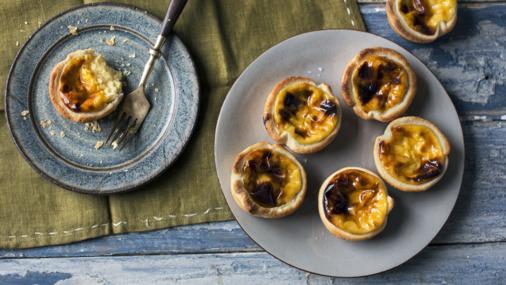
Portuguese custard tarts

Ingredients

For the sugar syrup
250g/9oz caster sugar
1 cinnamon stick
½ lemon, whole peeled rind only

For the custard filling
25g/1oz plain flour, plus extra for dusting
12g cornflour
300ml/10½fl oz milk
4 free-range egg yolks, plus 1 whole free-range egg
vanilla seeds from one vanilla pod
300g/10½oz ready-made all-butter puff pastry


Method

  • Preheat the oven to its highest setting, or at least 230C/210C Fan/Gas 8.
  • For the sugar syrup, bring the sugar, cinnamon and lemon rind to the boil in a saucepan with 250ml/9fl oz water. Reduce the heat until the mixture is simmering, then simmer for 3 minutes. Set the syrup aside until completely cool. Once cool, discard the cinnamon stick and lemon rind.
  • For the custard filling, mix the flours together in a bowl. Pour in a little bit of milk and stir with your finger until combined.
  • Bring the remaining milk to the boil in a saucepan over low heat, stirring regularly.
  • Gradually add the boiled milk to the flour mixture and whisk for 1 minute, or until smooth and well combined.
  • Slowly whisk in the sugar syrup until well combined.
  • Whisk in the egg yolks, whole egg and vanilla seeds until smooth and well combined. Set aside.
  • Roll out the pastry onto a lightly floured work surface to a rectangle measuring approximately 50x30/20x12in, but more importantly to a thickness of 1mm.
  • With the longest edge of the pastry rectangle facing you, roll the pastry as tightly as possible, brushing it from right to left with water as you go. Cut the pastry roll into 2cm/¾in-thick discs.
  • Place the discs in the holes of a muffin tin and massage them with a circular motion using a wet thumb, until the pastry rises up the sides of the holes in the tray. Make sure you don’t make any holes in the pastry.
  • Fill the pastry cases with the custard until they are almost, but not quite, full.
  • Bake the custard tarts in the oven for 20 minutes, or until the pastry has risen and the surface of the custard is scorched. Set aside to cool for at least 10 minutes before serving to allow the custard to set slightly.

Recipe Tips

To glaze the tarts, spray them with a chefs' water-pressure sprayer as soon as they come out of the oven.


Cheat’s chocolate tart

Ingredients

For the pastry
175g/6oz plain flour
40g/1½oz cocoa powder
80g/3oz icing sugar
140g/5oz butter, diced
2 medium free-range egg yolks

For the filling
750g/1lb 10oz milk chocolate
260ml/9½fl oz double cream
120ml/4fl oz amaretto

For the topping
200g/7oz blanched almonds
250g/9oz caster sugar
100g/3½oz dark chocolate, finely grated
75g/2½oz coffee beans

For the coffee cream
1 tbsp freeze-dried coffee granules, dissolved in 1 tbsp boiling water
3 tbsp coffee liqueur
200ml/7fl oz double cream
50g/1¾oz caster sugar


Method

  • For the pastry, sift the flour, cocoa powder and icing sugar into a bowl. Add the butter and rub together using your fingers until the mixture resembles breadcrumbs. Add the egg yolks and mix together until it forms a dough. Add a little ice-cold water if the pastry feels dry. Wrap the dough in cling film and place in the fridge to rest for at least an hour.
  • Preheat the oven to 170C/340F/Gas 3½.
  • When the pastry is rested, lightly flour a work surface and roll out the dough into a circle about the thickness of a £1 coin. Lay the pastry over the tart case and gently push down to line, taking care to get the pastry right into the edges. Line the pastry with baking parchment and fill with baking beans or uncooked rice. Place the tart on a baking tray and bake in the preheated oven for 25 minutes.
  • Carefully remove the baking parchment and beans and place the tart back in the oven to cook for a further 10-20 minutes, or until the base looks dry. Remove the tart from the oven and allow to cool. Once cooled, trim the pastry to tidy up the edges.
  • For the filling, break up the milk chocolate and place into a bowl over a pan of barely simmering water. Do not let the bowl touch the water. Once melted, remove the bowl from the heat.
  • In a pan over a medium heat, bring the double cream and amaretto to the boil. Pour the cream mixture over the melted chocolate, whisking everything together well. Pour this mixture into the cooked tart case and cool to room temperature before placing the tart in the fridge for 30 minutes, or until set.
  • For the topping, preheat the oven to 190C/375F/Gas 5 and place the almonds on a baking tray. Place in the oven and cook for 8-10 minutes, or until they are toasted and lightly browned. Remove from the oven and leave to cool for a few minutes. Line a tray or plate with baking parchment.
  • Put the caster sugar and 50ml/2fl oz water in a pan over a medium heat and cook until the sugar starts to colour. Stir in the almonds and mix until the sugar coats the almonds to give a frosted appearance. Transfer the almonds to the lined tray or plate and leave to cool. Once completely cooled, roughly chop the almonds into pieces.
  • For the coffee cream, mix the dissolved coffee granules and coffee liquor to a paste in a large bowl and add the sugar. Pour in the double cream and whisk to firm peaks, being careful not to over-whip it. Cover with cling film and place in the fridge until needed.
  • Check that the tart has set. If not, leave it in the fridge for a further 20 minutes. Once set, cover with grated chocolate and sprinkle with the coffee beans and frosted almonds. Serve with the whipped coffee cream.


Recipe Tips

Use the best quality chocolate you can for optimum results.